When I was told I didn’t
have lupus (which I was diagnosed with in the late 90's) but I actually had UCTD I felt lost.
I literally thought “what the fuck?”.
What the hell is that? Do the
doctors not know what’s really wrong with me?
Am I in limbo until I get an “official” diagnosis? Too many questions clogged my brain but it
all sounded way too hard to deal with so I put it to the back of my mind (well, I pretended too,
anyway) and tried not to dwell on it (I did!).
How stupid was that? Not knowing about your self is never a good
idea, it only makes matters worse. So
recently I decided to get off my butt and do some research and found that UTCD
isn’t really as scary as I had first thought!
(Still a little scary, but manageable!)
So, UCTD stands for
“Undifferentiated Connective Tissue Disease”, also known as “Undifferentiated
Autoimmune Disorder (that’s what my rheumatologist called it).
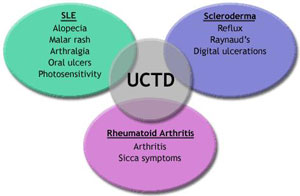
The term "undifferentiated connective tissue
disease" is used to describe people who have symptoms and certain lab test
results that look like a systemic autoimmune disorder or connective tissue
disease. But they don't have enough of
such characteristics to meet the diagnosis for a well-defined connective
tissue disease, such as rheumatoid arthritis, lupus, or scleroderma. Thus, they seem to have another, similar disorder
that doctors call undifferentiated connective tissue disease. 1
Although the word "undifferentiated" sounds vague,
rheumatologists know this term describes a real problem. It does not mean that your doctor does not
know what to call what you have. 1
Well, there you go!
I’ll be buggered! I’m not in
no-mans-land after all. When I learnt
that it was a weight off my shoulders. I
was suddenly in a “group” and when I googled it I found several support groups
for UCTD which was even more of a relief.
The term undifferentiated connective tissue
disease was first used in 1980’s to identify people who were recognized as
being in the early stages of a connective tissue disease (CTD) but who did not
yet meet the standard criteria for a well-defined CTD. At that time, it was noted that a substantial
proportion of these patients remained undifferentiated – or experienced a
disease remission – and never evolved in to a more defined
rheumatic disease. 1
Other names used early on to describe some of
these patients included "latent lupus" and "incomplete lupus
erythematosus”, which meant that some features suggestive of lupus were
present, but not enough to make the diagnosis. As many as a quarter of all patients seen by rheumatologists have UCTD. 1
My symptoms are more in
line with lupus then any other autoimmune disorder, although I have developed
arthritis in my hips that have required total hip replacements (one done, one
to go). My other symptoms are light sensitivity,
occasional dry eyes, skin rash, lethargy, joint aches (Arthralgia) and high antinuclear antibodies (ANA). A
high ANA level indicates that there is something wrong with the immune system. None of my internal organs have been affected.
Other common problems that can be
associated with UCTD are hair loss, mouth ulcers, fever, Leukopenia
(decreased numbers of white cells in your blood),
Anemia (decreased numbers of red blood cells in your blood) and Raynaud's phenomenon (colour changes in your hands and
feet in response to cold).
Rarer symptoms include pleuritis or pericarditis (inflammation of the lining surrounding the
lungs or heart, respectively, which can cause chest pain especially with
breathing) or neuropathy (abnormal nerve sensations, usually in the fingers or
toes, ranging from numbness to tingling to pain) may occur. Problems with the kidneys, liver, lungs or
brain are almost unheard of. 1
The problems seen with UCTD usually are not
life-threatening, nor do they typically get worse over the years. 1
So what causes UCTD? Like any other autoimmune disorder, UCTD is
caused by the immune system not working properly. The immune system is meant to protect our
bodies; fight viruses, bacteria, colds and flu, etc. However those with autoimmune disorders have
immune systems that don’t fight invaders so well and actually attack the body
itself!
It is thought that UCTD
can be developed by certain environmental triggers (major allergies as a child,
for example) or is genetic (passed through the genes, you have it from birth),
but the true causes are not widely understood.
Some positives… similarly
to some cancers, UCTD and other autoimmune disorders can have periods of
remission, when there are no symptoms such as pain or flares.
Patients with UCTD have an excellent prognosis (a
prognosis is a forecast about the likely course of a disease).
Almost all studies to date indicate a low
likelihood of progression to any involvement of organs such as the kidney,
lungs, and brain. A small minority of
patients (<20%) go on to develop a well-defined connective tissue disease,
but this becomes much less likely if the disease has been present unchanged for
greater than five years. 1
UCTD requires a fair
amount of lifestyle change. For example,
I’ve had to change my diet quite radically, eliminating any allergens so that I
don’t experience flares. I’ve also had
to sell most of my furniture and buy new furniture that doesn’t house dust
mites (which cause severe flares to my skin).
We have built our own home with a wooden floor and blinds instead of
curtains and spray nearly everything with Eucalyptus spray which is lethal to
dust mites.
We rarely go out anymore
which was a huge disappointment to me and my hubby as we have always been
“foodies” and enjoyed our regular day trips to local restaurants and cafes. Three of my main allergies are to tomato,
garlic and the onion family (including shallots and leek) and these foods are
in nearly everything when you go out.
I’ve also recently learnt that I have a high allergy to coconut! I used
to use coconut creams to moisturise my skin with and I LOVE Thai food. Alas, no more. Another bummer is that I've had to reduce my wine intake. I love wine! Now I have it on special occasions only.
But it’s not too bad. We are developing new cooking techniques and
have found that we quite like French style cooking so we are playing with that
more and more. This Christmas we are
making Duck a L’Orange, a classic French meal.
Yum! With a bottle of sparkling Grant Burge chardonnay. Big smiles.
☺☺☺☺
So, living with UCTD isn’t
too terrible. Don’t get me wrong, there
have been LOTS of terrible times and I expect more in the future, but I am
learning (oh-so-slowly) how to manage my condition and make the very best of my
life, which BTW, I love!!
❤❤❤❤
It's important for people to understand that UCTD isn't the same every single day. There are good days and bad days. Bad days are when our symptoms explode through the roof and we are even sicker than normal. This is when we need the most support. Carly Findlay, who has a condition called Ichthyosis, explains that well in her blog here -
Nine nice things to do for your friend whose chronic illness has exacerbated - Carly Findlay
Websites you might find
useful:
What You Should Expect From UCTD: Learning toLive with Undifferentiated Connective Tissue Disease (book)
 |
| Me on a Good Day! |
---------------------------------------------------

No comments:
Post a Comment